
Introducing a Puppy to a Home with an Existing Dog: How to Build a Safe and Successful Relationship
Should You Get Another Dog?
One of the things I hear fairly regularly is "I think my dog would love a puppy” and whilst sometimes that might be true, it often isn’t.
Before choosing to add another dog into your household, it's important to pause and consider who the decision is really for. Is it for you? Is it because you miss having a puppy in the house? Is it because you think your dog is lonely? Or is it because your dog genuinely enjoys living with and interacting with other dogs?
Adding a puppy to your household is not simply bringing home a new family member, it is fundamentally changing the life of your existing dog.
For your puppy, everything is new and exciting but for your older dog, everything they know is about to change and understanding this perspective is one of the most important factors in creating a successful multi-dog household.
Common Reasons People Get Another Puppy (When They Probably Shouldn't)
"My dog needs a friend."
Dogs are social animals, but that does not automatically mean they want to live with another dog - many dogs are perfectly happy as only dogs. They enjoy their human family, their routine, their walks, their favourite sleeping spots and having access to resources without competition.
If your dog enjoys greeting dogs on walks but then happily moves on, this does not necessarily mean they want another dog living in their home 24 hours a day.
"The puppy will keep my older dog active."
This is one of the most common misconceptions.
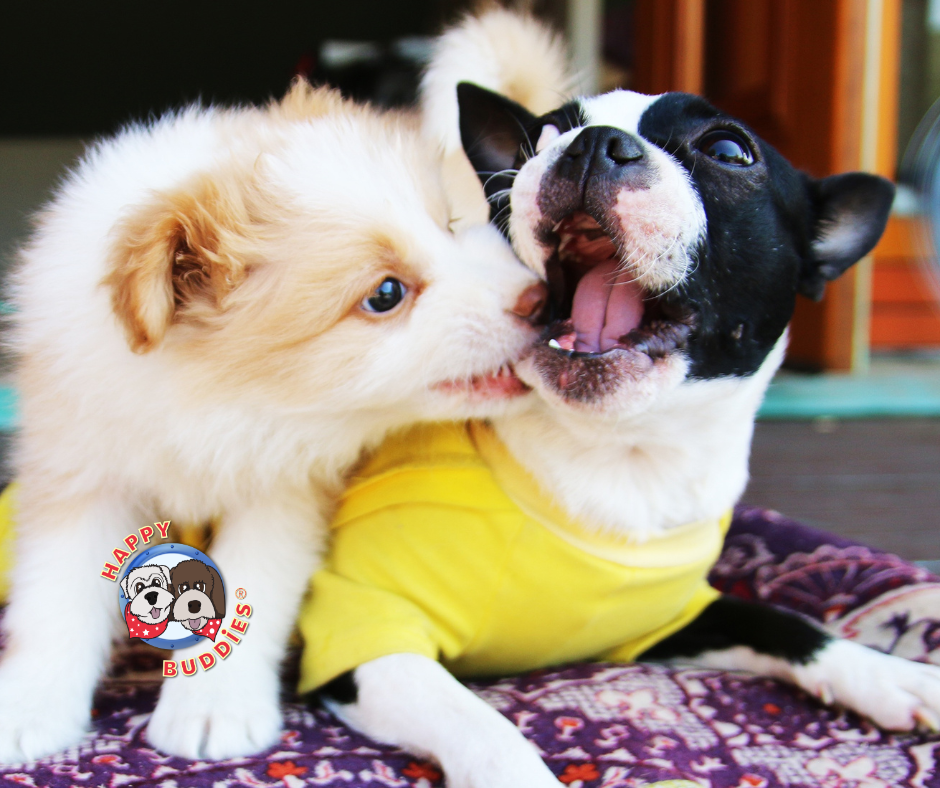
Young puppies can be exhausting. They have endless energy, poor social skills, limited impulse control and little understanding of personal space. For an older dog, this can feel less like companionship and more like harassment.
Many senior dogs actually become more stressed when a puppy arrives, not more active.
"My dog seems bored."
Boredom is usually solved through enrichment, training, exercise, scent work, food puzzles and engagement with their humans.
A puppy should never be acquired as entertainment for another dog.
"My dog loved our friend's puppy."
There is a huge difference between meeting a puppy for an hour and living with one permanently. Temporary interactions occur on your dog's terms but living together means sharing resources, space, attention, resting areas, routines and personal boundaries every day
Is It the Right Time for Your Existing Dog?
Before bringing home a puppy, honestly assess your current dog's emotional and physical wellbeing.
Ask yourself:
Does my dog genuinely enjoy other dogs?
Does my dog have good social skills?
Is my dog physically healthy?
Does my dog cope well with change?
Is my dog currently dealing with anxiety or behavioural challenges?
Is my dog entering their senior years?
Does my dog enjoy interaction or prefer peace and quiet?
Consider Your Dog's Age
A three-year-old dog and a twelve-year-old dog may have very different feelings about a new puppy arriving.
If Your Existing Dog Is Still Young:
It is important is considering whether your existing dog is still a puppy or adolescent themselves. Many owners assume that because their young dog is energetic and playful, they would automatically benefit from having a puppy companion. However, adolescence is already a significant developmental period and young dogs are still learning important life skills, developing emotional regulation, building confidence and establishing good habits. Introducing a puppy at this stage can sometimes disrupt that process. The existing dog may become over-aroused, develop unwanted behaviours through constant interaction, or struggle to learn how to settle independently. In some cases, the two young dogs can form such a strong attachment to each other that they become overly reliant on canine companionship and less engaged with their owners, making training and recall more challenging. Managing and training one adolescent dog can be demanding; managing two immature dogs at different developmental stages often requires significantly more time, structure and experience than owners anticipate.
There is also a risk that behaviours you are still working on with your existing dog - such as jumping up, pulling on the lead, excessive barking, poor recall or difficulty settling - can be reinforced or copied by the new puppy. Before adding another dog, it is worth asking whether your current dog has reached a level of maturity, stability and training that would allow them to be a positive role model rather than another learner in the household.
If Your Existing Dog Is In Their Senior Years:
I personally wouldn’t introduce a new dog to our household whilst one of my dog’s is 13, arthritic and completely deaf as it just wouldn’t be fair to him.
Senior dogs often:
Need more sleep
Have reduced mobility
Have hearing or vision changes
Have less patience for juvenile behaviour
Value predictability and routine
This does not mean senior dogs cannot live successfully with puppies but it does mean the puppy's arrival must be managed with the senior dog's needs as the priority.
Understanding How Your Existing Dog May Feel
Imagine living peacefully in your home where you know the routine, where everything is, when meals will happen, where to sleep and how attention is shared but then suddenly a small, energetic, noisy newcomer arrives.
This new coming jumps on you, steals your toys, interrupts your rest, follows you everywhere and demands attention from the people you love. This is often how the arrival of a puppy feels from the older dog's perspective.
Even the most tolerant dog may experience:
Frustration
Stress
Confusion
Jealousy
Anxiety
Overwhelm
These emotions do not mean they dislike the puppy, they just mean they are adjusting to a major life change and our role is to help them navigate that change successfully.
Preparing Your Home Before the Puppy Arrives
Successful introductions begin long before the puppy walks through the front door and the most important management tool is separation.
Many owners assume the goal is to have both dogs together constantly but in reality, successful relationships often develop because both dogs are given regular opportunities to be apart.
Essential Management Equipment
Before your puppy arrives, invest in:
Stair gates
Puppy pens
Room dividers
Tethers and house lines
These tools are not about punishment – they are there to create safety, reduce pressure and prevent conflict.
The First Meeting: How to Introduce a Puppy to an Existing Dog
Choose Neutral Ground Where Possible
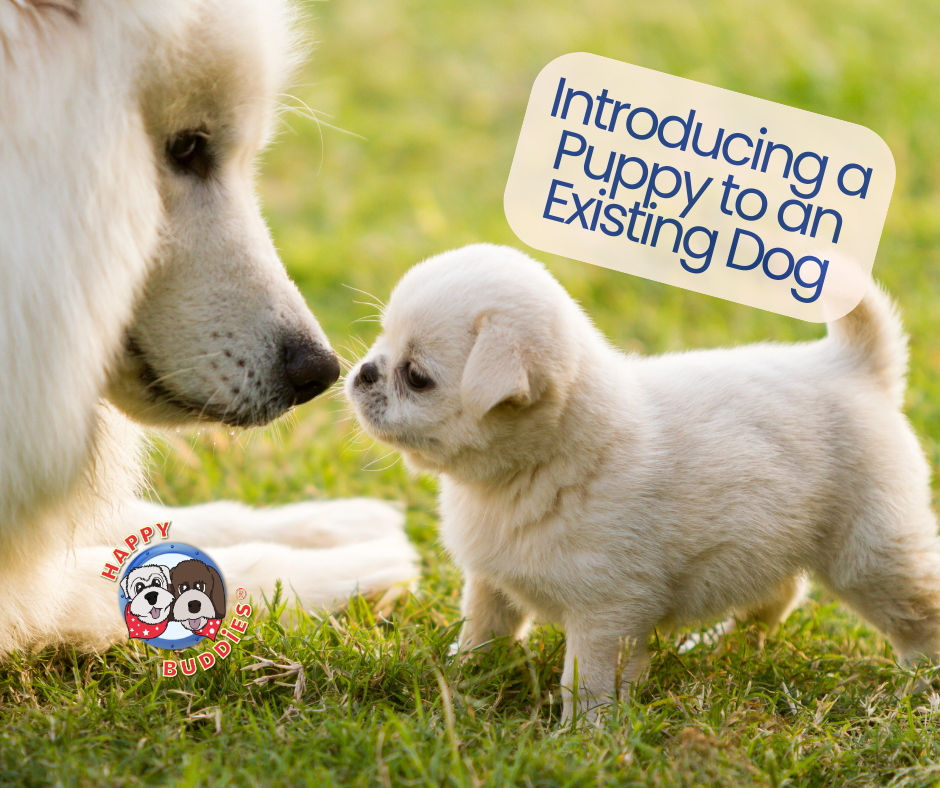
Rather than bringing the puppy directly into the older dog's territory, consider meeting in a neutral outdoor location.
This could be:
A quiet field
A neutral walking route
A secure outdoor space unfamiliar to both dogs
Keep interactions calm and brief, avoid forcing greetings and allow both dogs to investigate naturally.
What About Puppies Who Are Not Fully Vaccinated?
If your puppy is not yet fully vaccinated, speak to your veterinary practice about the level of risk in your area and their recommendations. In many cases, a neutral introduction can still be achieved by using a secure private garden belonging to a trusted friend or family member with healthy, vaccinated dogs or another low-risk private outdoor space that is not frequented by large numbers of unknown dogs, foxes or cats. Alternatively, the puppy can initially be carried while the older dog is allowed to observe and move freely around them. The aim is not necessarily physical interaction straight away, but allowing both dogs to become familiar with each other's presence in a calm, controlled environment. Avoid busy public dog-walking areas if vaccination status or disease risk is a concern.
While neutral ground can be beneficial, it is not a requirement for a successful introduction. Long-term outcomes are far more influenced by careful management, gradual exposure and ensuring the older dog's needs are respected in the days and weeks that follow.
Keep Expectations Realistic
Your goal should not be about getting an instant friendship between the two dogs but instead building a calm acceptance of each other.
Many owners expect:
Playing together immediately
Sleeping together instantly
Becoming best friends within days
These expectations though create pressure so instead, celebrate small wins such as:
Calm observation
Polite sniffing
Relaxed body language
Shared space without tension
These are the foundations of a healthy relationship.
Watch the Older Dog's Body Language
Your existing dog will tell you how they feel and signs they need more space may include:
Turning away
Moving away
Lip licking
Yawning
Whale eye
Freezing
Stiff posture
Growling
Growling is communication, it is valuable information and mustn’t be punished. If you punish growling it often removes the warning signal rather than addressing the discomfort behind it.
Why Separation Is Critical
One of the biggest mistakes owners make is allowing unrestricted access between puppy and older dog – your older dog should not become the puppy's full-time babysitter.
Use Gates Generously
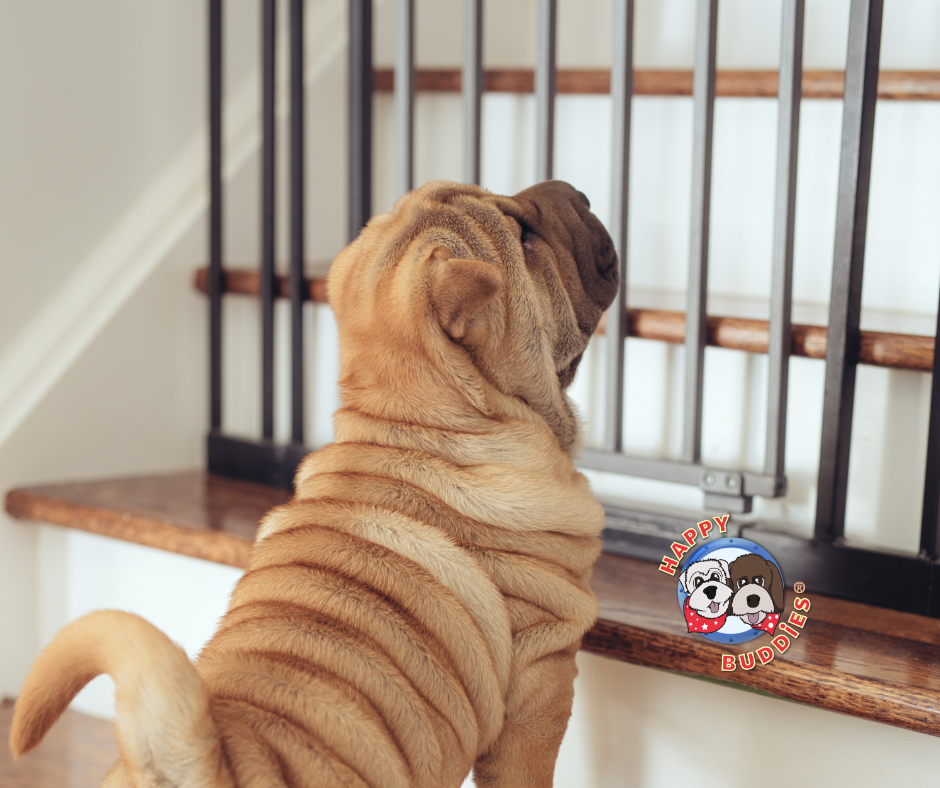
Stair gates are invaluable as they allow:
Visual contact
Safe interaction
Physical separation
Rest opportunities
Both dogs can see each other, smell each other and become familiar with each other's presence without constant interaction and this significantly reduces stress.
Protect Resting Areas
Every dog should have:
Their own bed
Their own quiet area
Their own feeding location
Their own retreat space
The puppy should never have unrestricted access to the older dog's safe spaces.
Teach the Puppy Respect
One of your most important responsibilities is teaching the puppy that older dogs have boundaries.
Too often, owners expect the older dog to teach manners but this places an unfair burden on them. It is your responsibility to be your puppy’s primary teacher. If you see inappropriate behaviour, then you need to interrupt it.
Step in when the puppy:
Jumps on the older dog
Bites excessively
Chases relentlessly
Disturbs sleep
Steals resources
Ignores social signals
Don’t wait for the older dog to become frustrated or stressed, instead intervene early and calmly.
Reinforce Calm Behaviour
Reward the puppy for:
Settling quietly
Choosing independence
Ignoring the older dog
Relaxing on a mat
Remaining calm around resources
These behaviours are often more valuable than play!
Manage Resources
Resource competition is one of the most common causes of tension in multi-dog households.
Feed Separately
Always feed dogs in separate areas and even if both dogs appear comfortable, prevention is preferable to conflict.
If you have a puppy that is fed 3-4 times a day, give the older dog a treat at the same time so they don’t feel left out but see the puppy’s feeding time as a positive for them too.
Manage High-Value Items
Be cautious with:
Chews
Bones
Toys
Food puzzles
Favourite sleeping spots
Remove opportunities for competition wherever possible.
Training Tips for Building a Positive Relationship
Continue One-to-One Time
Many older dogs struggle because they suddenly lose individual attention so maintain:
Individual walks
Individual training sessions
Individual play
Individual cuddles
Your older dog should not feel replaced.
Train Both Dogs Together and Separately
Joint training sessions build positive associations however, individual training remains equally important.
Each dog needs opportunities to:
Learn independently
Build confidence
Receive personal attention
Walking Dogs with Different Exercise Needs
One challenge that is often overlooked is that puppies and adult dogs have very different exercise requirements.
Many owners imagine enjoying long walks with both dogs together, but young puppies are not physically or emotionally ready for the same type or duration of exercise as an adult dog. Their joints are still developing, they tire more quickly and they can easily become overstimulated by too much activity.
One of the biggest adjustments for an existing dog is the sudden change to their daily routine. If they previously enjoyed a peaceful morning walk or a longer weekend hike try to maintain those activities wherever possible.
The arrival of a puppy should add to your household, not take away from the quality of life your existing dog already enjoys. Protecting their routine can go a long way towards helping them feel secure and valued during the transition.
Although puppies are not able to match an adult dog's exercise levels, it can still be beneficial for both dogs to spend time together on walks. One way to achieve this is by taking the puppy along in a sling, carrier, backpack designed for dogs or a suitable puppy buggy, while your older dog enjoys their normal walk. This allows the puppy to experience the sights, sounds, smells, and routine of being out with the family without the physical demands of walking long distances.
Reward Calm Presence
One of the most powerful exercises is simply rewarding both dogs for existing calmly near each other.
No interaction required; no play required - just calm coexistence.
This creates positive emotional associations and reduces pressure.
Understanding the Timeline
Relationships take time - sometimes a lot of time.
A realistic adjustment period may be:
Several weeks for basic comfort
Several months for routine development
Six to twelve months for a truly established relationship
Don’t rush the process, remember friendship cannot be forced and trust develops through consistent positive experiences.
The Key to Success: Protect the Older Dog
If there is one principle that matters above all others it is:
Protect the older dog's experience.
The puppy is joining their world not the other way around.
When owners prioritise the puppy's excitement while overlooking the older dog's needs, problems often develop but when owners protect the older dog's rest, boundaries, routines and emotional wellbeing, trust is preserved - and when trust is preserved, relationships have the opportunity to flourish.
In Summary
Adding a puppy to a household with an existing dog can be incredibly rewarding, but it should never be viewed as an automatic gift to your current dog.
Some dogs welcome a puppy enthusiastically whilst others tolerate them and some struggle significantly.
The decision should always begin with the needs of the dog already living in your home.
If you do choose to bring home a puppy, focus less on creating instant friendship and more on creating safety, predictability, trust and respect.
Use management tools such as stair gates, pens, barriers and separate spaces. Advocate for your older dog and teach the puppy appropriate boundaries. Prevent overwhelm before it occurs.
The strongest relationships are rarely built through constant interaction - they are built through carefully managed experiences that allow both dogs to feel safe, understood and respected.
When we remember that it is the older dog's world that has been turned upside down, we give both dogs the best possible chance of building a lifelong bond.